
Transitioning to regenerative
agriculture: the case of
strawberries
Albert Lacunza, Director of Agronomic and Regenerative Solutions
Cristina Trigo, Madre Tierra Project Manager
Braulio Torres, Director of Impact and Learning
October 2023
The transition to more sustainable agriculture is not linear, but rather a gradual process that involves the adoption of multiple practices over time. It often begins with improvements to conventional farming—for example, implementing agronomic plans that enable more rational fertilizer use. As the transition advances, regenerative practices are gradually introduced: replacing chemical inputs with biological alternatives, incorporating green fertilizers, and using agroforestry techniques. These strengthen the agroecosystem’s capacity to generate its own fertility and thus reduce dependency on external inputs. The following diagram illustrates this stepwise transition for some of the systems we work with.

With this in mind, when designing technical assistance processes with small-scale farmers, we ask ourselves three guiding questions.
Does this agronomic solution improve the farmer’s profitability and competitiveness?
Would Nature approve—does it fall within the planet’s ecological limits?
Do these new practices pose risks for farmers? If so, how can we mitigate them?
We have applied this logic in our work to strengthen the strawberry value chain. Through the Madre Tierra Project in Maravatío, Michoacán—launched in 2019 together with our partners Danone, TechnoServe, Altex, and GIZ—we set out to foster innovation and facilitate the adoption of better agricultural practices among small-scale strawberry producers. A central question guiding us has been: “What does regenerative strawberry agriculture mean in the context of small-scale farming in Mexico?”
“What do I like most? The simple fertilization program. Knowing what the plants need, how much to apply... what I can and cannot mix so nothing gets blocked. I didn’t know any of that before.”
The project has focused on key issues such as soil nutrition, irrigation efficiency, biodiversity, and rational input use. We developed a technical assistance model we call the “Lab of Labs.” This approach combines “minimum” transition practices considered good agricultural practice (e.g. improved irrigation management) with “basic” regenerative practices (e.g. soil coverage). Over time, the goal is to encourage adoption of more “advanced” regenerative practices such as agroforestry.
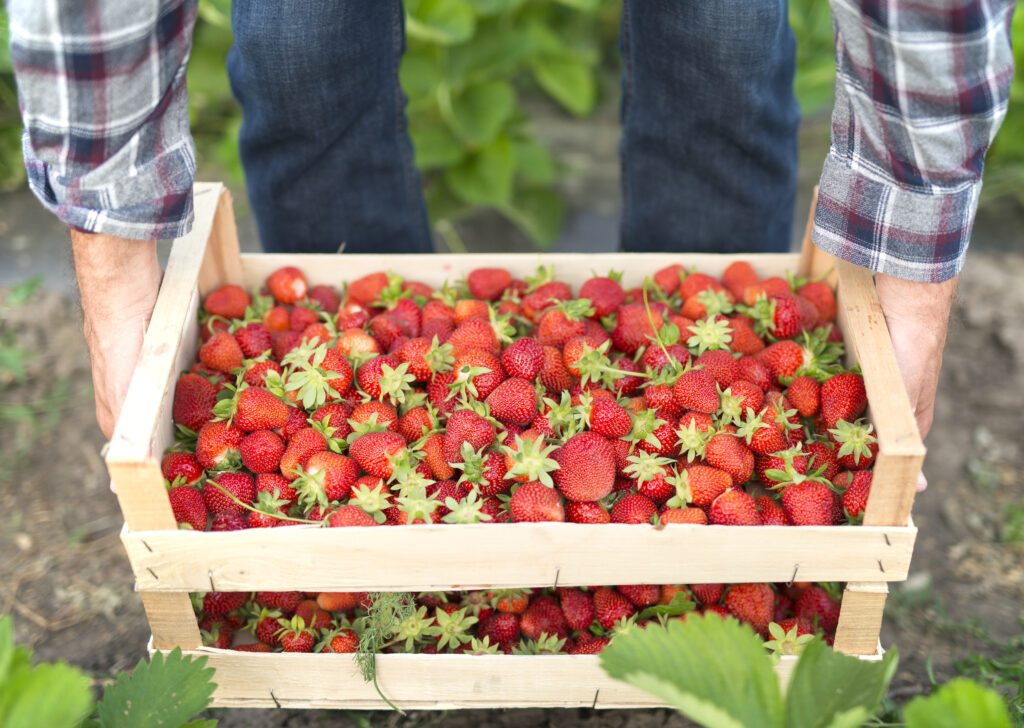
During the 2022/2023 strawberry cycle, ten producers joined the Lab of Labs to experiment with improved practices. One major challenge was fertilizer management: plans were often poorly timed, with excessive and inefficient input use, compounded by the conflict of interest of advisors who were also input suppliers. To address this, producers were given tools to better assess their fields’ needs, starting with soil analyses and nutrition plans tailored to each growth stage, in collaboration with Tierra de Monte.
The producers cut fertilizer costs by 50% through individualized nutrition planning and regular monitoring. Pest diagnoses were carried out before interventions, leading farmers to reduce chemical treatments from 2–3 per week to 1 per month on average, while learning to apply organic alternatives. In addition, personalized water balances were developed for each producer based on their irrigation system, parcel data, and weekly projections of weather and soil moisture. By combining these three weekly data sources, producers received clear and concrete guidance that not only reduced the water footprint by 50% on average, but also lowered pumping costs and diminished the risk of pests and diseases linked to overwatering.
These strawberry farmers are beginning their transition to regenerative models by experimenting with new practices and integrating data into decision-making. The process will be gradual and will vary for each producer. We don’t claim to have all the answers: by working as a “laboratory,” our goal is to test what works, side by side with farmers, and co-develop agricultural models that strengthen farmers’ livelihoods while protecting nature.
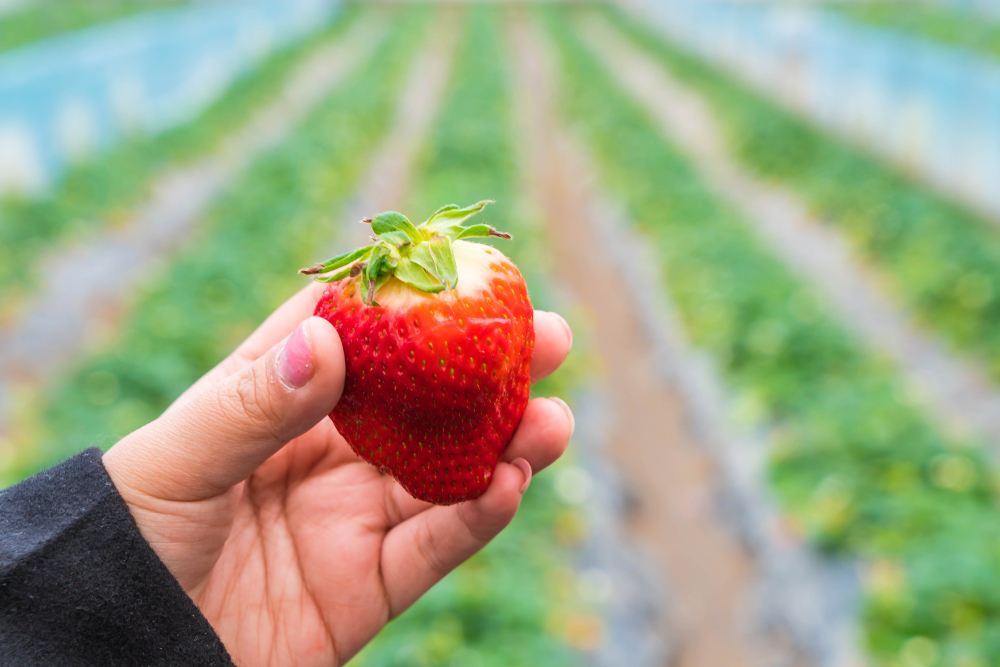
Regenerative practices tested include plant-based mulching, the use of bioplastics of vegetable origin, live barriers to support biological control and pollination, and the application of microorganisms from transplant throughout the crop cycle, thereby avoiding chemical soil fumigation. Corn stover was also trialed as a mulch between strawberry rows. Covering inter-row spaces with stover minimized weeding and eliminated herbicide use while maintaining strawberry production. Farmers also highlighted additional benefits: improved soil organic matter, cleaner fruit (less splash dirt), easier harvesting, and better rainwater retention without causing waterlogging or erosion.
One farmer in La Trinidad, who produced his own corn stover, saved MXN $61,500 per hectare in labor and weeding input costs. Regenerative practices are more readily adopted when they show tangible benefits for farmers’ bottom lines.
“Of all the different practices, using corn stover seems the best for me.”
The Madre Tierra Project underscores the importance of regenerative agriculture, an approach focused on restoring soil and biodiversity while promoting sustainable food production. In the Maravatío region, regenerative agriculture has demonstrated benefits for both farmers and the environment. At Nuup, we remain committed to making agronomic and regenerative practices accessible to small-scale producers.