Call for Proposals:
Bioeconomy Acceleration Fund

Driven by BIOFIN with support from Nuup

The 2021 call for proposals is now closed. We are currently working on the next phases of investment and opportunities. If you’d like us to keep you informed about future calls for proposals, please share your information here:

What is the Bioeconomy Acceleration Fund (FAB)?

The FAB is a business acceleration tool that aims to finance and strengthen the capacities of companies and enterprises that rely on and positively impact biodiversity, helping them access high-value markets.

The Fund is part of the Bioeconomy Strategy. It was created based on the experience of the UNDP’s BIOFIN Initiative mobilizing resources for biodiversity, and on the knowledge and networks of Nuup, a nonprofit organization working to build fairer, more inclusive, and more sustainable value chains.

The FAB is a key instrument to fill the financing gap for projects and companies that are past their initial stage but still cannot access conventional financial markets. It also identifies existing and potential projects for other organizations to support and develop into scalable models.

2021 Call for Proposals

The 2021 call invited projects in incubation or growth stages that leverage or enhance biodiversity to implement specific actions that would enable them to access higher-value markets.

The 2021 call for proposals has now closed. If you’d like us to keep you informed about future calls for proposals, please share your information here:

The project selection process involves three stages.

First, the technical team validates projects, ensuring that they comply with the principle of bioeconomy and have submitted complete documentation.

Organizations that comply with these basic requirements are invited to prepare and present their impact phase to the impact committee, which approves or rejects them.

Organizations approved by the impact committee prepare their business case for the investment committee, which decides whether or not to approve financing. 

What is the Bioeconomy?

The bioeconomy comprises economic activities with a competitive focus that use components of biodiversity as a main input to create value with a net positive impact on livelihoods, communities, and the ecosystem.

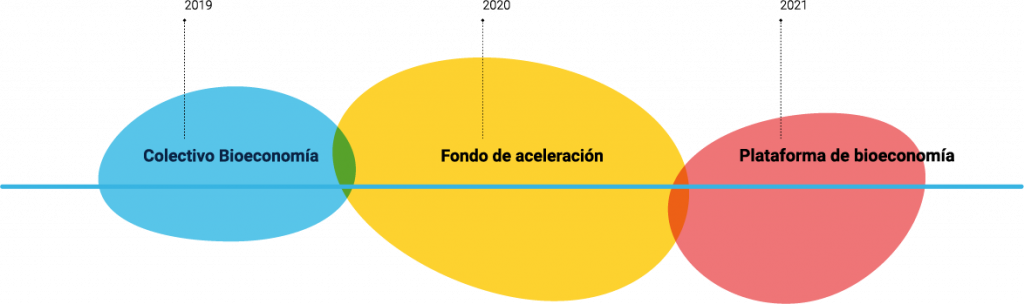
Bioeconomy Collective

2019

Launched in 2019, the Bioeconomy Collective brings together more than 35 organizations and civil society representatives who share the goal of promoting the bioeconomy. The group has also presented its objectives at forums with the financial sector.

Acceleration Fund

2020-2021-2022 

The first call for proposals (by invitation) took place in 2020 with follow-up during 2021. The second call took place in Q2 2021, with investments made in Q3 2021.

Platform

2022

The platform will be launched in early 2022 to serve as a meeting point for producers, investors, and consumers of bioeconomy goods and services.

To learn more, contact us at
[email protected] and [email protected]

Approved bioeconomy financing
2020 and 2021

Inana, AC

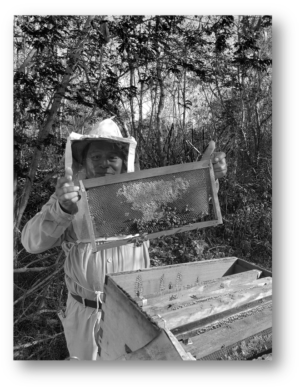
Research and development of innovative products from stingless bee propolis

INANA has identified a propolis derivative that could form the basis for innovative consumer products with high added value for female producers.

It is a water-based propolis extract for cutaneous use or ingestion, the only product of its kind in Mexico derived from stingless bees. With the support of the FAB, an R&D project will be carried out which is beyond the current capacity of INANA. 

Grupo Apícola Texan de Palomeque Muuk'Kaab

Investment to increase operational efficiency and internalize logistics

MUUK´KAAB is working to increase its sales and prepare new producers and providers. 

However, its logistics are inefficient and its plant lacks space to expand. Growth at the expense of profit margins is not a healthy business strategy. Proactively identifying and resolving this issue supports MUUK’KAAB’s mission to ensure economic wellbeing for producers. 

With support from the FAB, MUUK’KAAB will create a new logistics area for collection and marketing. This project will reduce transportation costs by 50 to 70%. Since this is a common problem among communities in the region, the service will be offered to other social organizations, establishing honey collection routes, as well as distribution and sales routes.

CAFECOL

Creation of a revolving fund to unlock high-value export opportunities

CAFECOL has identified a new market niche with high value for producers that provides the opportunity to sell differentiated lots. 

Given the producers’ lack of a consolidated sales history and the low proposed financing amounts, financing this type of export is not attractive to investors in the sector. With support from the FAB, CAFECOL will provide revolving financing for producers to collect their coffee and obtain a better price and higher sales volume. By strengthening this commercial activity, up to 84% of the biodiversity found in small fragments of the Cloud Forest can be conserved.

Cooperativa Moluscos del Mayab

Location: Yucatán
Category: Incubation

Cooperativa Moluscos del Mayab is a group of six people—three men and three women—who seek to generate information that will enable improvements in the production, processing, and marketing capabilities of farmed Mayan octopus.

The Cooperative is in the process of establishing a pilot farm. This is a pivotal moment, during which it hopes to achieve the first pilot-scale production of octopuses. This will provide vital information about the process, enabling improvements to gradually increase production capacity. The Bioeconomy Acceleration Fund supported the cooperative in strategic planning for the product’s market launch.

Neminatura

Location: Michoacán
Category: Incubation

Neminatura is a family business founded 29 years ago with the goal of producing healthy, environmentally friendly food.

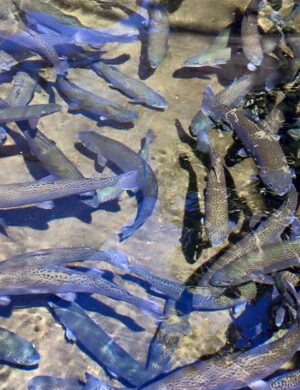
In its first three years, it began farming rainbow trout, free-range pigs, and planting forest trees to restore the severely degraded soil. Currently, Neminatura is dedicated to the comprehensive farming of aquaculture species (rainbow trout and bullfrogs) using integrated agroforestry management. It also offers nature tours and gastronomic experiences, primarily for people in Mexico City.

The Bioeconomy Acceleration Fund, as part of the incubation category, supported Neminatura in a strategic planning process due to the collapse of traditional markets, like high-end restaurants, during COVID-19.


 

Guardianas del Mezcal

Location: Oaxaca
Category: Incubation

Guardianas del Mezcal is a group of 12 female mezcal producers in 4 municipalities in Oaxaca (San Carlos Yautepec, Santa María Zoquitlán, San Pedro Totolapan, and San Luís Amatlán). They aim to advance the sustainability of mezcal production by focusing on gender relations in the world of mezcal and the protection of natural resources.

In 2020, the Guardianas del Mezcal entered an organizational strengthening and technical assistance process financed by the FAB as part of the incubation category. In 2021, after a competitive process, they were again selected as winners in the incubation category for investment in infrastructure and commercialization.

Familias Productoras Agroecológicas de Cacao del Soconusco

Location: Chiapas
Category: Incubation

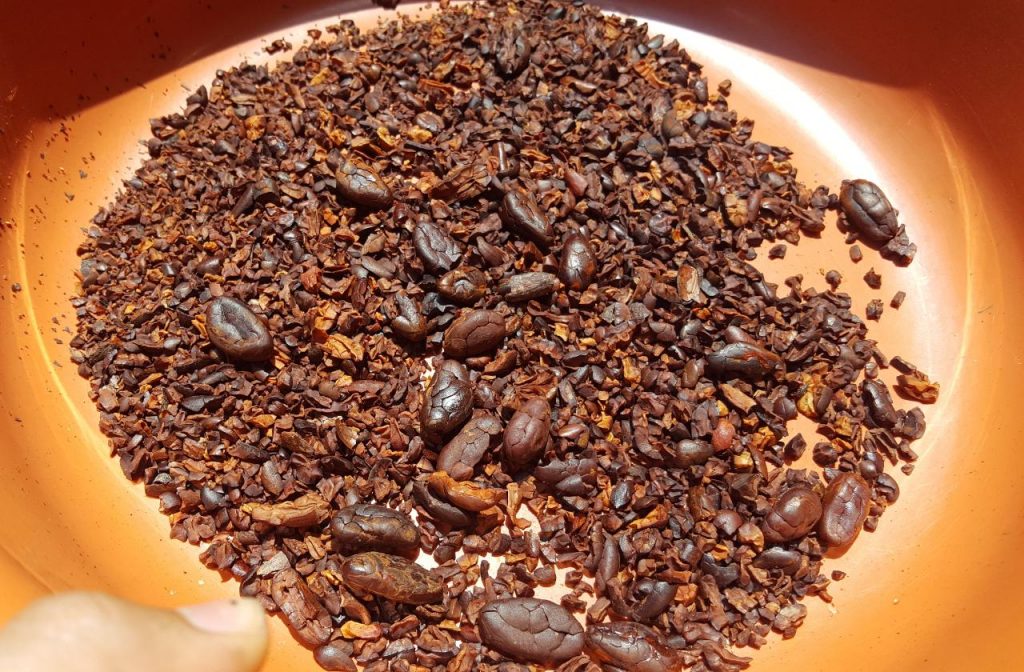
The Familias Productoras seek to maintain and improve cocoa production, prioritizing biodiversity conservation through a cooperative and sustainable model that allows them to improve their crops year after year, manage natural resources efficiently, and obtain the highest quality beans to sell in fair markets.

With incubation financing, they will be able to consolidate the management of a collection fund for direct payments to cocoa producers, increasing current collection capacity by 100%. They will also invest in infrastructure by constructing a warehouse to optimize storage and sales logistics.

Chasseurs de Saveurs

Location: Puebla and Veracruz
Category: Acceleration

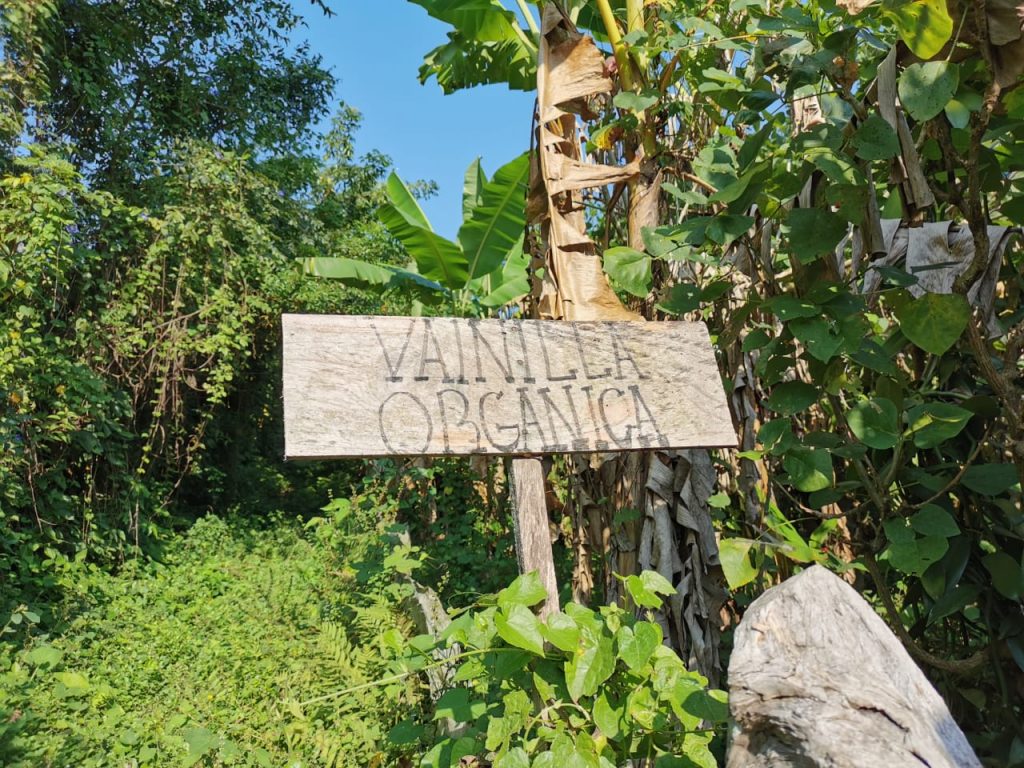
Chasseurs de Saveurs aims to promote responsible and organic agriculture, in addition to developing fair sales and marketing models, with the producer network of the Mexican Association of Edible Forests as its main partner. In 2018, Chasseurs de Saveurs launched a certified organic vanilla production program, benefiting 370 families.

After being selected as winners of FAB acceleration funding, Chasseurs de Saveurs developed an Organic Vanilla Fund, which aims to increase their collection capacity for the organic vanilla cycle and serve as an annual financing tool, as well as ensure good pollination and the safety of vanilla plantations.

Sociedad Cooperativa de Producción Pesquera "29 de Agosto"

Location: Sonora
Category: Acceleration

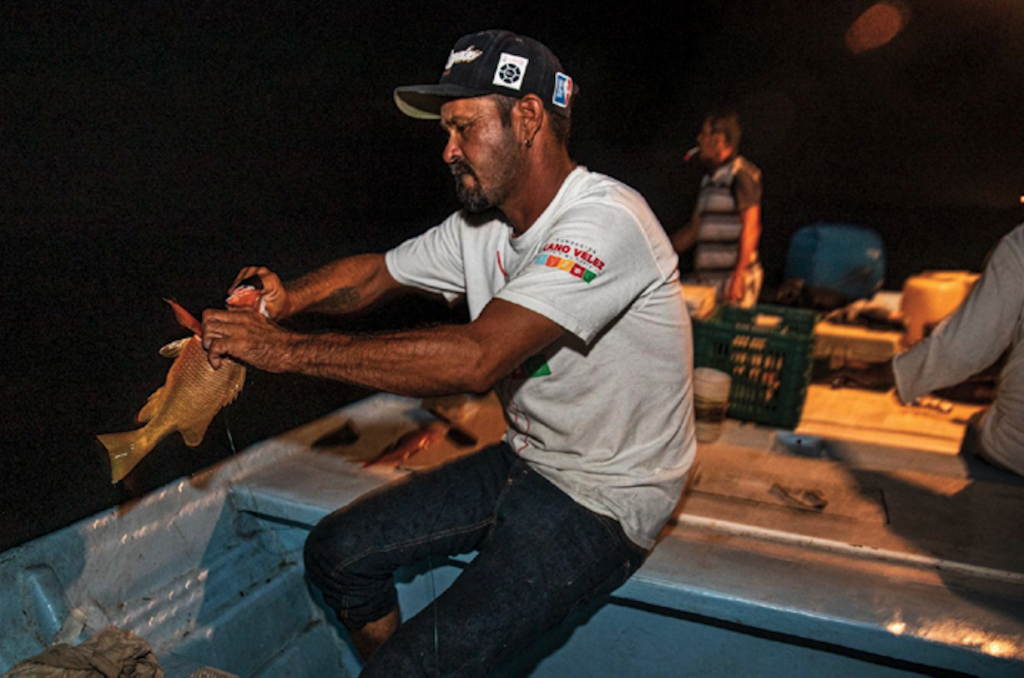
The Sociedad Cooperativa de Producción Pesquera “29 de Agosto” is a fishing cooperative that guarantees the livelihood of its families and remains an economic alternative for integrating new generations of environmentally responsible fishermen while always having the freshest and highest-quality fish and seafood on sale.

In 2021, it was selected as one of the winners in the acceleration category for investment and infrastructure development, seeking to build a primary processing plant with processing tables, a traceability system, a vacuum packaging machine, blast chillers, and horizontal freezers. Its objective is to maximize the hygiene and sustainability of its catch, seeking to add value to its seafood products and consolidate access to preferential markets.

Cal y Maíz

Location: Tlaxcala
Category: Acceleration

Cal y Maíz sells products based on nixtamalized native corn to encourage continued planting using regenerative and biodiverse agriculture methods, paying fair prices for inputs and labor. They seek to contribute to corn, bean, and squash biodiversity in Mexico and improve nutrition by offering quality products.

With FAB acceleration funding, during 2022, Cal y Maíz intends to increase its biodiverse and sustainable harvesting practices on its milpa fields, as well as secure funds for advance payments to farmers to enable proper management and maintenance. They will also invest in materials to make their corn processing and production processes more efficient within the workshop, while paying their employees fair wages.  

We reimagine
agricultural systems