
Transitioning Nopal Cultivation in the Teotihuacán Valley Toward a Regenerative Production System
Esther Camacho, Daniela Gutiérrez, Fernando Medina and Sadie Bograd
January 2026
“88% of aquifers in the State of Mexico show signs of depletion, irrational use, and overexploitation.” (CONAGUA)
The Teotihuacán Valley is located in the State of Mexico and forms part of the Moctezuma Basin—one of the country’s most hydrologically significant and, at the same time, highly vulnerable watersheds in central Mexico. The basin faces a 15% overexploitation of its water resources (Lagos 2025), a condition that directly affects agricultural productivity in the region—particularly nopal production systems—as well as local water security and socioeconomic dynamics.
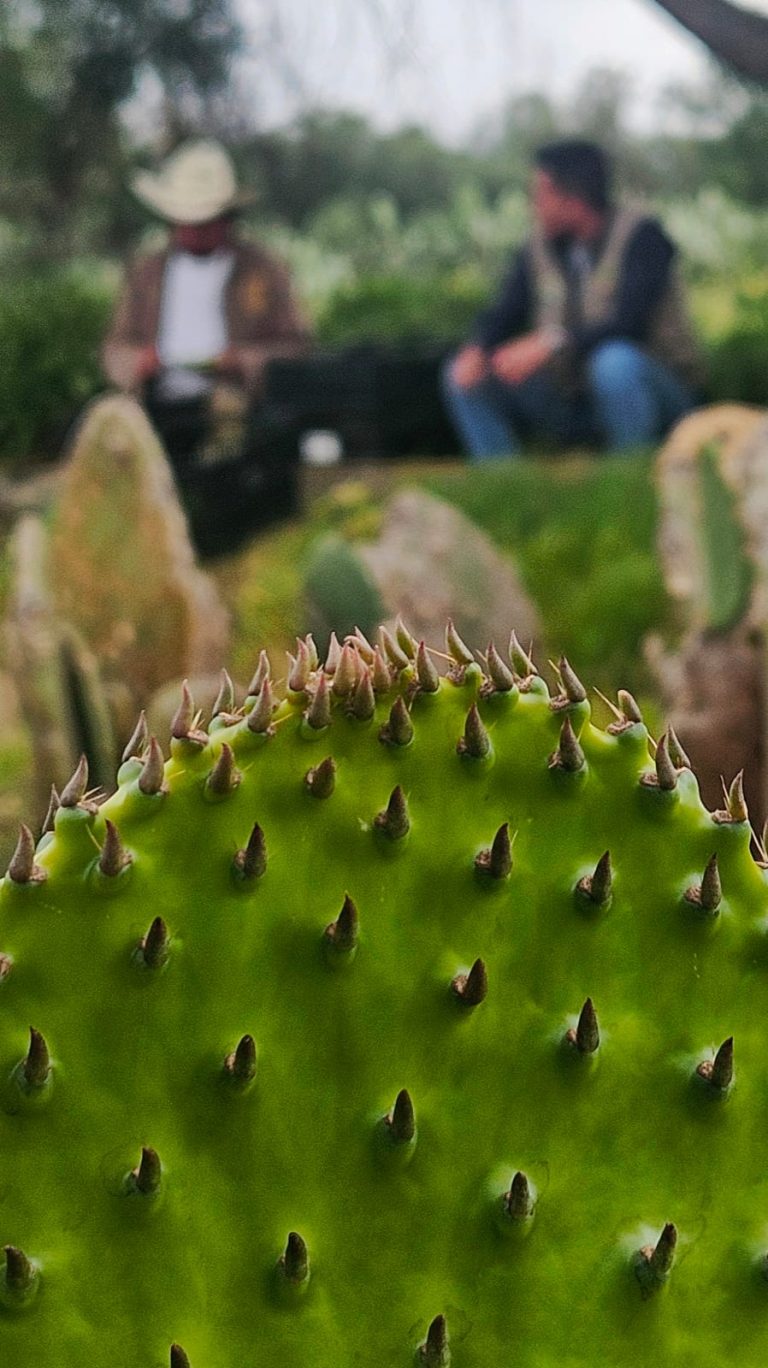
Currently, the basin is under significant pressure due to both climate change and intensive, indiscriminate water use. At the national level, the agricultural sector accounts for more than 70% of total water consumption (SADER 2024), which increases stress on water resources, especially in contexts of scarcity. Drought events have become more frequent, severe, and prolonged, leading to a sustained decline in aquifer recharge. In 2022, 78.42% of production units in the State of Mexico reported production losses associated with drought (INEGI 2024). Compounding this challenge is the reduction and increasing irregularity of rainfall, with an approximate 20% decline over the past two decades (Lagos 2025), further limiting water storage capacity and intensifying stress on existing water resources.
Nopal is an endemic Mexican food with deep sociocultural relevance. The State of Mexico ranks among the top three producers of fresh nopal nationwide, with annual production exceeding 92,000 tons (SADER 2020).
Within the state, key producing municipalities include Otumba, Atlacomulco, San Martín de las Pirámides, and Ocuilan. Nopal cultivation primarily relies on groundwater sources such as wells that depend on local aquifers, many of which are currently overexploited.
Regenerative practices for holistic transformation
In the nopal sector, mounting pressures translate into multiple challenges, including declining water availability and the persistence of conventional management practices that intensify ecosystem disruption—contributing to biodiversity loss, soil degradation, and the progressive reduction of fertility. These systems can also contribute to greenhouse gas (GHG) emissions. In response, regenerative agriculture emerges as a productive approach aimed at restoring agroecosystems and natural cycles (such as the water cycle), strengthening resilience, and generating long-term socio-environmental benefits.
In the Teotihuacán Valley, Nuup has worked alongside small-scale nopal producers to introduce and promote regenerative practices across multiple dimensions. Through the Regenerate Mexico Program, we have advanced practices related to integrated water management, soil health, biodiversity enhancement, carbon sequestration, GHG emission reduction, and rural prosperity.
In terms of water management, actions have focused on redesigning plots, improving water conveyance infrastructure, and adjusting irrigation timing according to crop requirements. A key example has been transforming traditional “canoa” planting systems into raised beds arranged in furrows, with adjustments to bed width and length. These changes enable more efficient water use, reduce soil compaction, and lower both manual labor demands and pumping-related energy consumption. In one specific case and under particular production conditions, redesigning the planting layout reduced irrigation time from 20 hours to 9 hours per event.
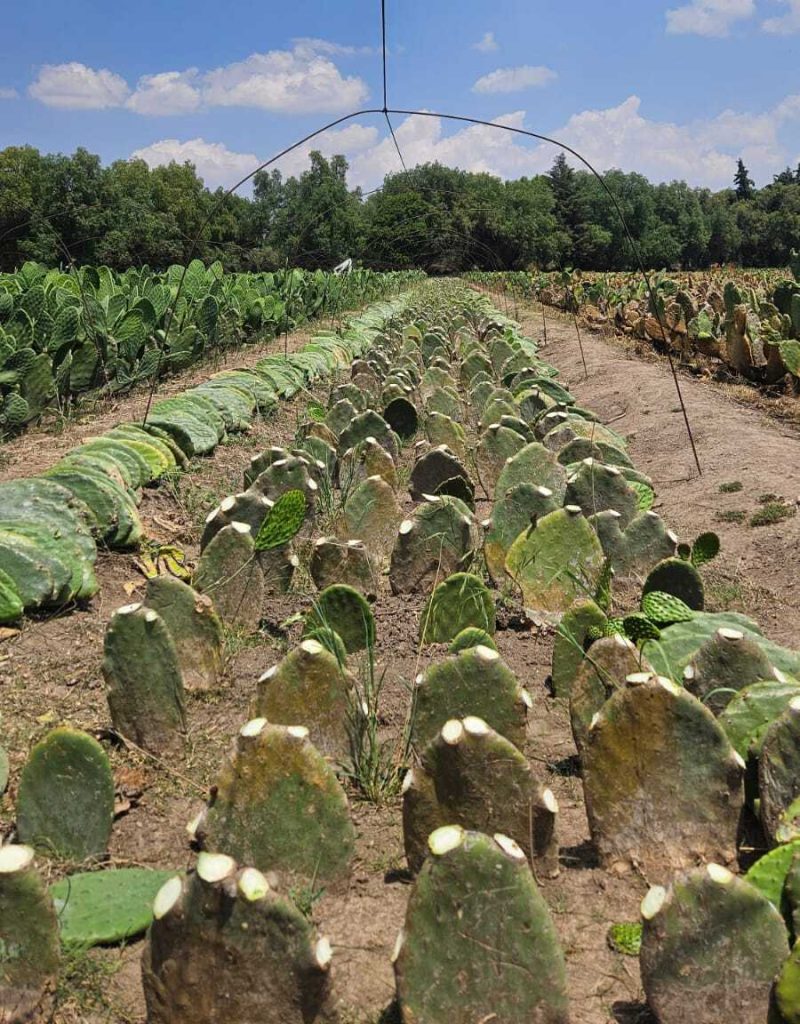
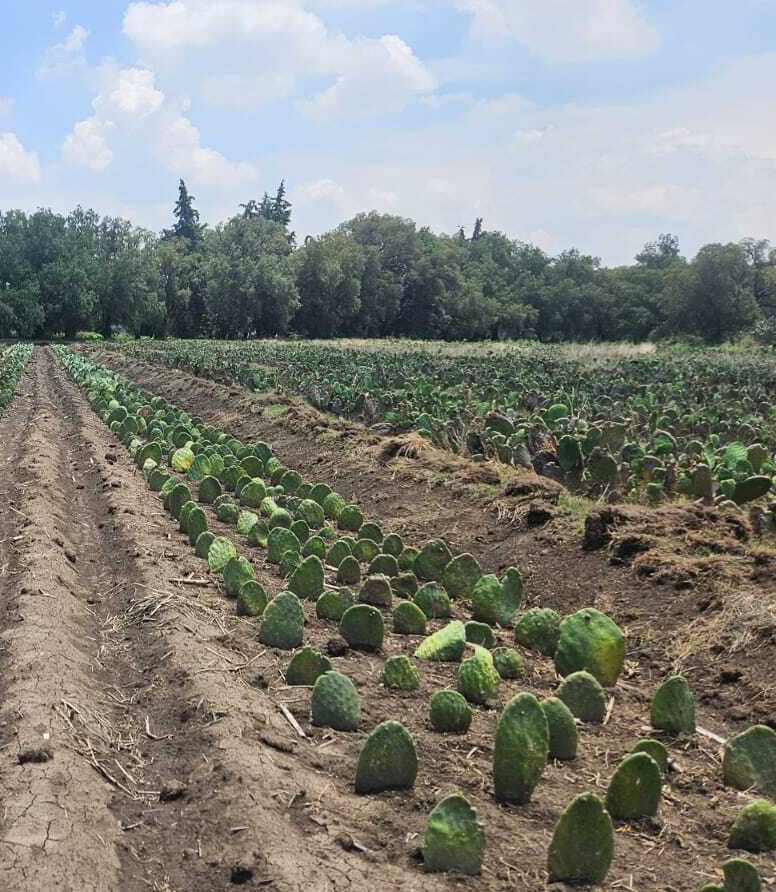
Complementary soil cover practices have also been implemented using crop residues, grasses, and manure to reduce competition from weeds, conserve soil moisture, and lower soil temperature. These practices improve soil structure, increase the presence of organic matter, and create a healthy environment for beneficial microorganisms that are essential to agroecosystem fertility and functionality. Notably, soil covered with crop residues maintained high moisture levels of 31% even 20 days after watering.
Productive intercropping designs have also been promoted, allowing multiple species to be cultivated within the same plot. These systems provide economic benefits through crop diversification while maintaining living ground cover to protect the soil year-round. A representative example is the association of nopal with species such as purslane and mouse-ear. This strategy supports nutrient cycling, reduces erosion, and strengthens system resilience under adverse climate conditions.
In addition, biodiversity islands composed primarily of native plants—including trees, shrubs, and herbaceous species—have been established to improve water infiltration, reduce water and wind erosion, provide wind protection, and create microclimates. These areas encourage beneficial insects, enhance pollination processes, and contribute to integrated pest and disease management by restoring essential ecological functions within the agroecosystem. Species introduced include ocotillo, sage, tehuixtle, Santa Anita, and flor de San Pedro, among others. This practice has also played a key role in raising awareness and strengthening producers’ understanding of biodiversity conservation.
Finally, organic inputs have been promoted for the management and control of common nopal pests and diseases, such as cochineal scale, with the goal of transitioning from conventional to agroecological management. This approach preserves ecosystem functionality, reduces dependency on external inputs, and improves crop productivity. As a result, infestations of cochineal scale were reduced by 80–90%, sprouting was stimulated, and both the size and quality of nopal improved. In one particular case (with the farmer Tomás), and under specific soil and location conditions, productivity increased by 33%, equivalent to approximately 70 additional kilograms of nopal per hectare..
Always hand in hand with producers
While regenerative agriculture represents a key response to environmental, productive, and climate-related challenges, it is essential to recognize that regeneration processes also involve social and community dimensions. In the Regenerate Mexico program, we promote this approach through capacity building in theoretical and practical workshops, as well as demonstration plots that serve as spaces for knowledge exchange and shared learning.
These efforts are strengthened by participatory processes with producers, enabling comprehensive and lasting change.
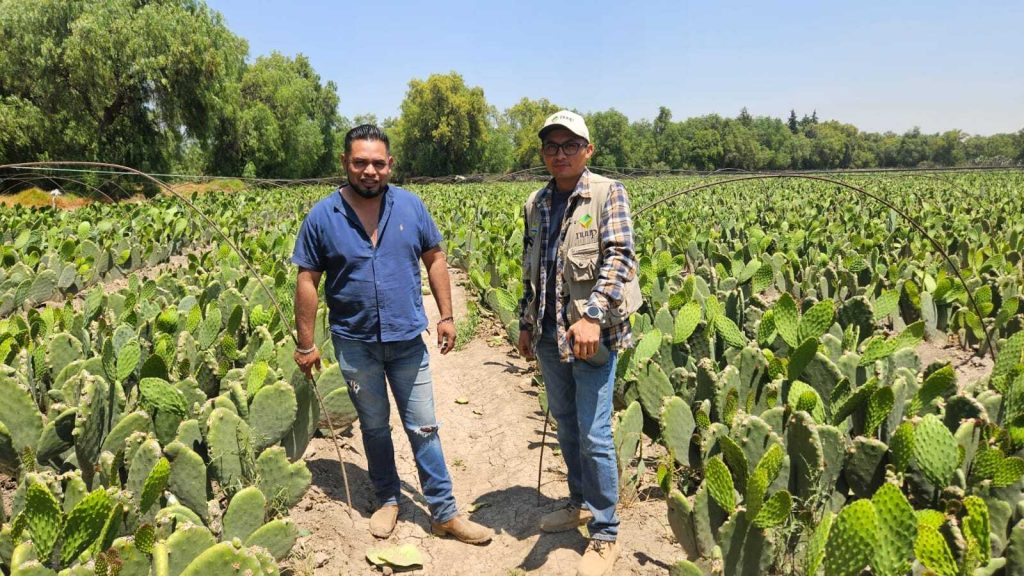
Tomás is a young small-scale nopal producer in the municipality of Axapusco. His productive trajectory is grounded in knowledge passed down through generations and in practical experience managing his plot.
Through a co-design process, Tomás renewed his crop by adjusting both the planting layout and irrigation method—moving from fewer, longer furrows to a greater number of shorter furrows. This modification significantly reduced irrigation time, from approximately 20 hours to 9 hours per event, generating direct impacts on labor organization, pump operation time, operating costs, and water consumption.
The ongoing path of a regenerative transition
Transforming production systems requires addressing systemic challenges through strategic intervention points, guided by a holistic vision.
Nuup’s core pillars—transitioning toward regenerative agronomic practices; strengthening fairer, more transparent, and more direct value chains; leveraging digital and data-driven tools; and expanding access to blended finance with impact—enable the integration of solutions that extend beyond production itself.
For this reason, the regenerative transition should not be seen as a fixed end state, but rather as a dynamic and continuous process built collaboratively with producers. Together, we move toward more sustainable and equitable food systems—systems capable of regenerating both ecosystems and the social fabric that sustains them.
* * *
References
CONAGUA. “Disponibilidad por acuífero.” https://sigagis.conagua.gob.mx/gas1/sections/Edos/edomex/edomex.html
INEGI. 2024. “Estadísticas a propósito del día mundial del agua: Desafíos y oportunidades en el uso agrícola en México.” https://www.inegi.org.mx/contenidos/saladeprensa/aproposito/2024/EAP_DiaMundAgua.pdf
Lagos, Anna. 2025. “‘Cinco Aguas’: el proyecto que impulsa la revitalización hídrica de la cuenca Moctezuma.” https://es.wired.com/articulos/cinco-aguas-el-proyecto-que-impulsa-la-revitalizacion-hidrica-de-la-cuenca-moctezuma
SADER. 2020. “El nopal, parte de la riqueza del campo mexicano.” https://www.gob.mx/agricultura/articulos/el-nopal-parte-de-la-riqueza-del-campo-mexicano
SADER. 2024. “Promueve Agricultura tecnologías para uso eficiente del agua.” https://www.gob.mx/agricultura/prensa/promueve-agricultura-tecnologias-para-uso-eficiente-del-agua